Cracking the Conversion Code: UX Best Practices That Turn Users Into Buyers

April 12, 2026
 -  
UX Best Practices
Anna Potanina

1. Start strong, end strong: optimise entry and exit points

Most users drop off at the very beginning or the very end of their Journey, which makes landing pages and checkout flows the highest-impact areas for optimisation.

A high-performing landing page should load quickly, target a clearly defined audience, and communicate a strong, relevant value proposition that aligns with your message. Instead of appealing to everyone, focus on a narrow user group and address their specific needs and pain points. Use relatable, goal-oriented visuals and ensure that key actions—such as call-to-action buttons—are visible immediately, ideally above the fold.
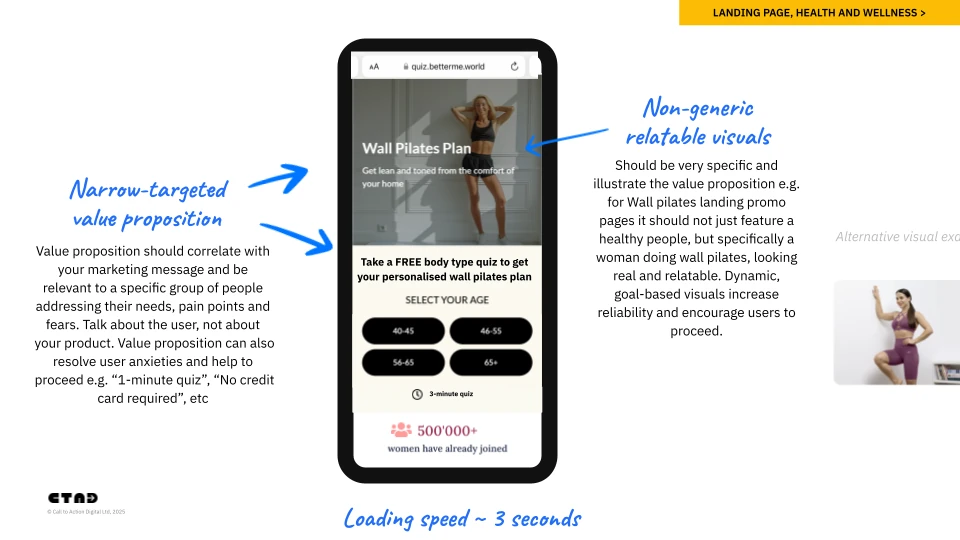
Personalisation plays a key role here: if you’re running multiple campaigns, create dedicated landing pages tailored to each audience. Even simple touches, like reassuring users that a form takes less than a minute or doesn’t require a credit card, can significantly reduce friction and increase engagement.

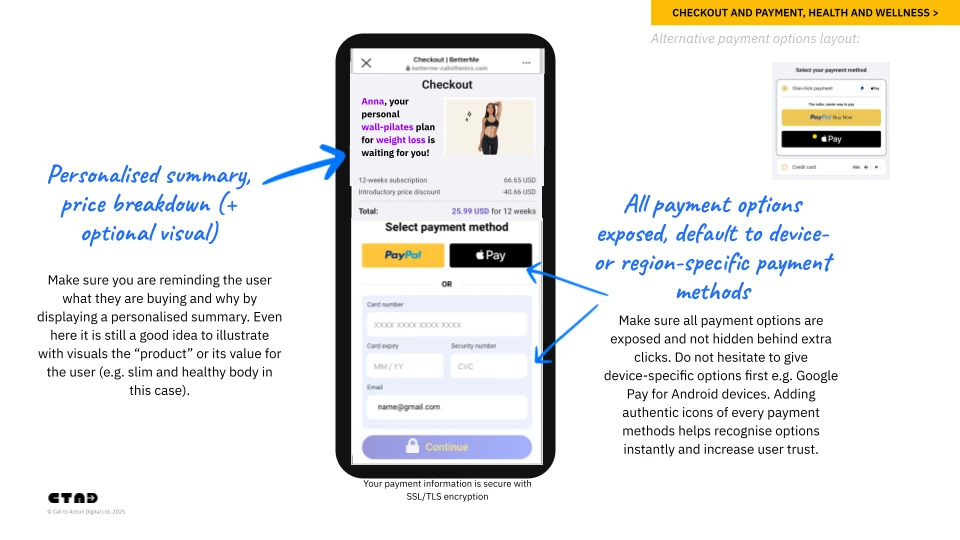
At the other end of the Journey, the checkout experience is just as critical. Reinforce user motivation with personalised messaging that reminds them what they’re buying and why it matters. Support this with visuals that highlight the value.

Make payment as seamless as possible by displaying all relevant options clearly. Use recognisable icons and prioritising device- or region-specific methods (such as Google Pay or PayPal). Features like autofill can further reduce friction and significantly improve conversion rates by speeding up the process.

2. Choose the ethical path to conversion

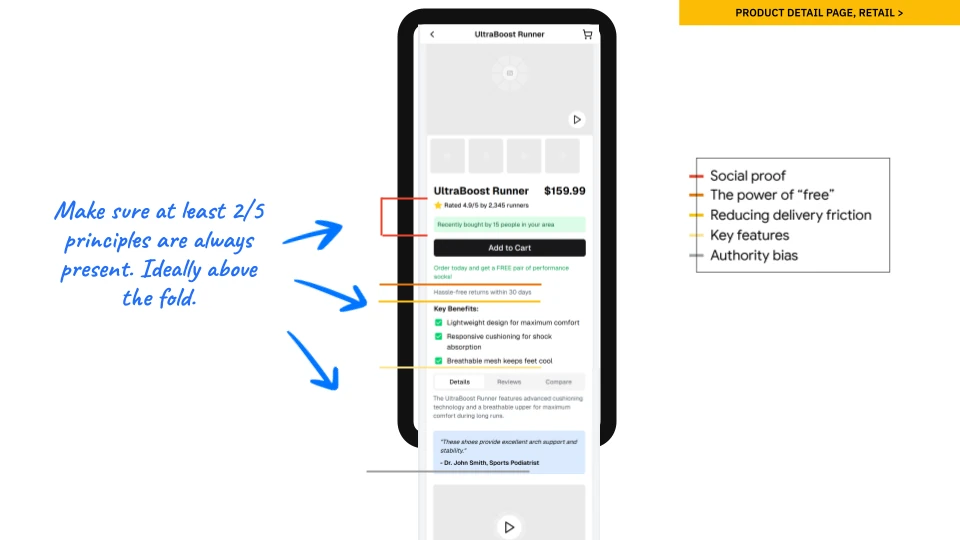
While it may be tempting to rely on tactics like fake countdown timers, misleading pricing, or artificial scarcity, these so-called “dark patterns” are becoming less effective—and increasingly restricted—as user awareness and regulation grow. More importantly, they erode trust and undermine long-term growth.

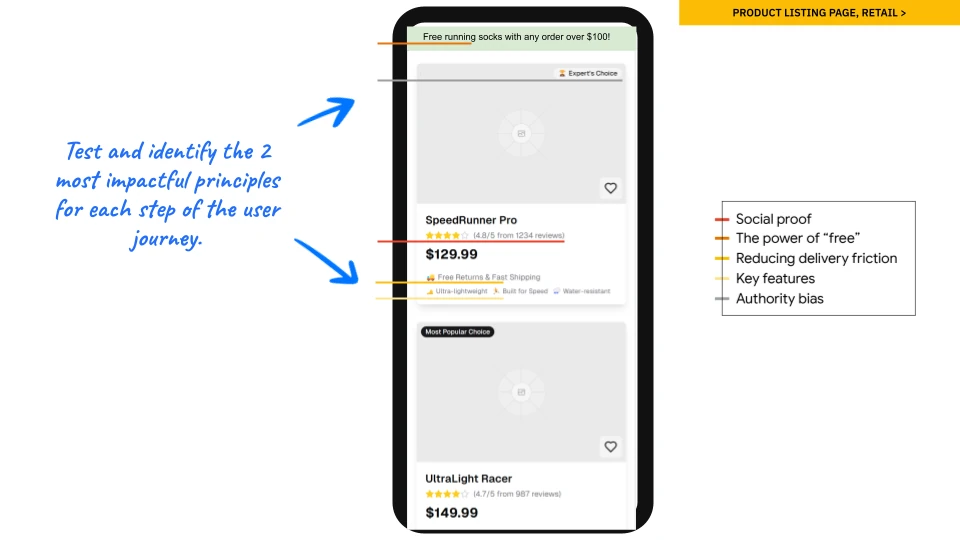
Instead, focus on ethical, sustainable approaches. Applying behavioural science principles throughout the user journey—combined with storytelling and interactive UI patterns—can deliver equally strong results without compromising user trust.

Some of the most effective principles include:

  • Social proof: Customer reviews and testimonials build credibility and reduce hesitation.
  • Endowment effect: Free trials, samples, or personalisation features create a sense of ownership, increasing perceived value.

Customer-as-Hero storytelling: Position the user—not the product—as the hero, with your brand acting as a guide that helps them achieve their goals.

When used consistently across key touchpoints, these techniques can drive engagement and conversions in a more authentic and sustainable way.

3. The UX non-negotiables: Clarity, Consistency, and  Error prevention

No matter how strong your value proposition is, poor usability can quickly derail the experience. That’s why clarity, consistency, and error prevention are non-negotiable in any interaction flow.

Clarity. Users should always understand what’s happening and what to do next. Clear language, intuitive labels, meaningful icons, and immediate feedback help eliminate confusion. 

Consistency. At the same time, consistency in navigation and design patterns builds familiarity and trust, making the experience feel predictable and effortless.

Error prevention is equally important. Anticipate potential mistakes and guide users with helpful prompts, validation, and smart defaults. Wherever possible, reduce cognitive load by simplifying decisions and focusing attention on one task at a time.

For more complex flows—such as KYC processes or personalisation questionnaires—break tasks into manageable steps. Use progress indicators, streamline forms, and avoid overwhelming users with too much information at once.

Anna Potanina
Like the article? Watch the video as well!

Transcript:

You might also like:

Like the resources? Schedule a call with our UX experts and chat with them in person!

People ignore designs that ignore people.
Frank Chimero; Brand & Product Designer
© 2025 Call To Action Digital. All rights reserved.